TPL_JAE_ACC_MAIN_HOME_CONTENT
THE ARCHAIC AND CLASSICAL PERIOD


THE ARCHAIC AND CLASSICAL PERIOD.
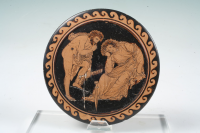
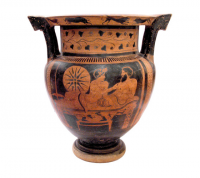
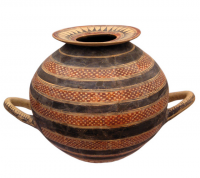
The Archaic-Classical section is dedicated to the development and maturation of the peucetian civilization (VIIth – Vth century B.C.) and particularly to the relations with the Hellenic circles and the Greek colonies near Taranto and Metaponto. The exhibition of indigenous ceramics and manufactures, imported from Greece, is here explained. These finds were discovered in tomb environments of the territory belonging to the central part of Apulia. Many local vases, with both monochrome and dichromatic geometric decorations, were recovered. Some Italiot illustrated manufactures of Hellenic origin are noteworthy, and also iron arms, among which a valuable bronze helmet, of Corinthian type. Furthermore, there are ceramic finds of colonial importation. An emblematic example is the lid of Apulian pyxis with red figures by the Dario painter, where the myth of Phaedra is represented. It was recovered from a funerary equipment in via Vecchia Buoncammino (it dates back to 340 B.C.).